Groningen Sustainability Conference 2027

Lessons from the Sustainable Development Goals (SDGs)

April 05 –10, 2027

Zernike Campus, University of Groningen, The Netherlands

Groningen Sustainability Conference 2027

Lessons from the Sustainable Development Goals (SDGs)

April 05 –10, 2027

Zernike Campus, University of Groningen, The Netherlands
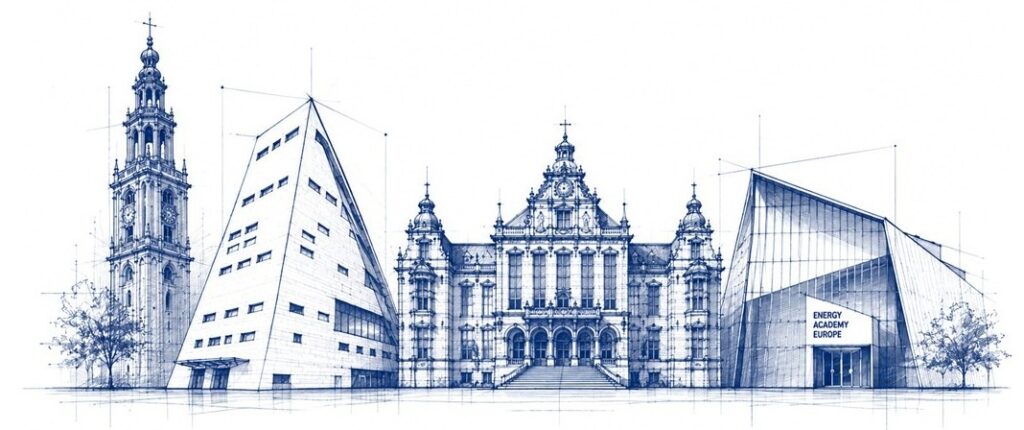
Accelerating Sustainable Development by 2030 and beyond

As the world approaches 2030, attention is increasingly turning towards how sustainable development can be accelerated in the remaining years of the Sustainable Development Goals (SDGs) while laying the foundations for what comes next. GSC 2027 provides a global platform for researchers, policymakers and governance experts, the private sector, and civil society to reflect on lessons learned from the SDGs and contribute to the future beyond 2030. Alongside reflection on the SDGs, the conference will engage with the major transformations shaping sustainable futures beyond 2030, including resilient societies, climate action, health and well-being, and the opportunities and risks of AI and digitalization.

Why Groningen?

Groningen is for those who go further. Located in the northern Netherlands, the city combines an international university, a strong culture of innovation, and a region undergoing major sustainability transitions. Groningen is investing in renewable energy, hydrogen, circular innovation, sustainable mobility, and healthier urban living. The city has set an ambitious goal of becoming climate-neutral by 2035, making it a relevant setting for discussing how long-term goals can be translated into concrete local action. The University of Groningen strengthens this setting through interdisciplinary research, education, and partnerships on sustainability science, energy transitions, health and well-being, digitalization, and governance. Many of the conference themes are therefore not only topics of debate but also part of ongoing research, policy, and practice.

Conference Objectives

The conference takes place at a pivotal moment. In 2027, the United Nations will hold its final SDG Summit as it increasingly turns its attention to shaping future sustainability agendas. GSC 2027 offers an opportunity to contribute ideas, evidence, and partnerships to that wider process, while also helping accelerate action in the remaining years of the SDGs.

The specific objectives of our conference are threefold:

  • To bring together various stakeholders to discuss their lessons from the SDGs and share ideas for sustainable development by and beyond 2030.
  • To build and foster stakeholder collaboration to prepare for the 2027 final SDG summit and beyond.
  • To develop the Groningen action points as an input for the 2027 final SDG summit and the post-2030 process.


6
Conference Days
80+
Conference Sessions
400+
Targeted Participants

Five Themes Shaping the Future

GSC 2027 comprises five broader themes, each comprising five topics. Its plenary and parallel sessions will address these themes and topics with a diverse geographical focus spanning local, national, regional, and global scales. We invite submissions of abstracts and sessions related to these themes and topics, including the provided keywords.

Under this theme, we seek contributions that critically assess what has and has not worked during the SDG era, identify lessons learned, and explore how these insights can shape the design, governance, monitoring, and implementation of a more effective, science-based, inclusive, and action-oriented sustainable development agenda beyond 2030. 

1.1 National and local implementation of SDGs, including barriers and opportunities

Keywords: policy implementation; SDG localization; national and subnational strategies; institutional capacity; policy coherence; financing; monitoring progress; implementation gaps; enabling conditions; best practices; Voluntary National and Local Reviews

1.2 Lessons learned from SDG governance and multi-stakeholder partnerships 

Keywords: multi-level governance; public-private partnerships; science-policy interfaces; stakeholder co-creation; institutional arrangements; collaborative governance; accountability; coordination mechanisms; capacity building; governance innovation, 

1.3 Integrated sustainability assessment of progress made on the SDGs 

Keywords: systems thinking, prioritization methods; analysis of synergies and trade-offs, integrated assessment models; sustainability indicators; scenario analysis and modeling approaches; SDG tools for communication, education, progress monitoring

1.4 Missing links and reforms for a sustainable development agenda beyond 2030

Keywords: emerging sustainability priorities; institutional and governance reforms, sustainability issues beyond the SDGs, e.g., air quality, resilience, peace, culture & language, animals, and others; future sustainability priorities; redesign of global goals 

1.5 Methods and processes for a sustainable development agenda beyond 2030

Keywords: Co-design of future agendas; science-based target-setting; indicator development; multi-stakeholder participatory processes; science-policy dialogue; negotiation; adaptive governance; institutional innovation; agenda-setting 

Under this theme, we explore how integrated transformations across natural, social, economic, urban, and technological systems can strengthen resilience and accelerate sustainable development. We invite contributions that advance integrated approaches across these systems and implementation at scales ranging from local to global. 

2.1 Ensuring food, water, and energy security and understanding their nexus

Keywords: nexus approaches; sustainable resource management; food system transformation; energy transition; water footprints; smart grids; sustainable fuels

2.2 Sustainable landscape and seascape for nature’s contribution to people 

Keywords: biodiversity, ecosystem services; biosphere integrity; nature-based solutions, landscape management; marine management; fisheries, natural capital accounting

2.3 Roles of equity & justice for sustainable transformation and resilience

Keywords: different types of justice; just transitions; social equity; Leave No One Behind; Indigenous Peoples and local communities; social vulnerability; community resilience

2.4 Measures for urban transformation, including sustainable mobility

Keywords: urban planning; climate-smart cities; green/blue infrastructure; sustainable housing; bio-based construction; urban metabolism; sustainable mobility

2.5 Economic approaches beyond GDP, including circularity and  bioeconomy 

Keywords: production and consumption; industrial symbiosis; value chains; business models; green growth; alternative metrics; life-cycle assessment; material efficiency

Under this theme, we address the climate-development nexus accounting for climate impacts, adaptation, and mitigation. We invite contributions that advance understanding of this nexus across socio-economic dimensions (finance, governance, policy, migration, and justice) and environmental/land-use dynamics (agriculture, forestry, oceans, and land cover). 

3.1 Modeling Earth system interactions, including climate impacts on development

Keywords: biosphere feedback; tipping points; carbon cycles; biogeochemical modeling; carbon cycle modeling; ecological modeling; climate impacts; vulnerability; disaster risk

3.2 Actions for climate change adaptation to build societal resilience

Keywords: climate proofing; maladaptation; early warning; limits to adaptation; National Climate Adaptation Strategy; National Adaptation Programme of Action 

3.3 Climate change mitigation and net-zero pathways for a just transition

Keywords: decarbonization; carbon tax and price; low-carbon technologies; mitigation scenarios; Integrated Assessment Models; Nationally Determined Contributions

3.4 Understanding climate change and climate actions for human security

Keywords: resource conflicts; geopolitical instability; transboundary climate risks;  climate-induced migration; human mobility; equity and justice

3.5 Climate governance, finance, and negotiation for sustainable development
Keywords: local/city/regional/community-based climate action, multilevel governance, Loss and Damage Fund, climate finance, macroeconomic modeling, climate-economic modeling

Under this theme, we follow a pathway from understanding health systems and identifying environmental and societal health risks to developing innovative solutions that ensure equitable health outcomes and embed health across the broader sustainability agenda. We invite contributions that address this pathway across local, national, and global scales

4.1 System perspective for addressing  one health nexus within ecological ceilings

Keywords: interactions between human, animal, and planetary health; biodiversity and health; climate-health interactions; environmental determinants of disease 

4.2 Environmental health and emerging pollutants, including regulatory and governance responses, and policy translation of exposure science

Keywords: Health impacts of emerging contaminants (e.g., PFAS, microplastics, endocrine disruptors, pesticides, pharmaceuticals; exposure pathways; biomonitoring; vulnerable populations; reproductive and developmental exposure windows

4.3 Developing solutions and innovations for healthier societies

Keywords: health risk assessment; novel materials/chemicals; predictive (in vitro, in vivo, human) models; new materials; biotechnology; toxicological; postmenopausal women; therapeutic targets; environmental remediation; novel monitoring approaches

4.4 Health equity, well-being, inner development, and societal foundations as societal outcomes 

Keywords: health inequalities; environmental justice; population health; healthy aging; well-being determinants; inner development; population system modeling

4.5 Health as both an outcome and driver of sustainable development

Keywords: SDG and health interactions, including climate, food systems, cities, education, clean energy, inequality, responsible innovation, governance, and a post-2030 agenda

Under this theme, we explore the multiple roles of AI, big data, and digitalization, from advancing analytical methods and supporting implementation to informing decision-making and shaping sustainability agendas beyond 2030. We invite contributions that critically examine both the opportunities and the challenges associated with these roles.

5.1 Advances in AI methods, big data, and digital technologies for sustainability analytics
Keywords: machine learning; Earth observation; digital twins; large-scale data integration; AI-based forecasting, monitoring, and modeling; sustainability analytics

5.2 AI as an enabling technology for understanding sustainable development and twin transition
Keywords: Applications of AI across sectors (e.g., climate, biodiversity, food, water, energy, cities, health, transport, etc.); twin green and digital transition

5.3 AI and big data for decision-making and sustainable governance as a supporting decision tool
Keywords: AI-assisted governance across public and private sectors; digital governance; Environmental, Social, and Governance policy auditing; Corporate Sustainability Reporting Directive compliance validation; policy-making models

5.4 Trustworthy AI, information integrity, data autonomy, and sustainability impacts of AI
Keywords: Responsible and ethical AI; transparency; explainability; accountability; fairness; privacy; cybersecurity; data governance; data autonomy; AI spillover effects; [

5.5 AI, big data, and digitalization for sustainable development by and beyond 2030, including opportunities and challenges
Keywords: emerging governance frameworks; international cooperation; new institutional arrangements; responsible innovation; opportunities; risks; barriers

Important Dates

All deadlines at 23:59 are subject to change.

24th August 2026

Abstract submission (Open)

25th October 2026

Abstract submission (deadline)

12th December 2026

Conference registration (early bird)

18th January 2027

Conference registration (regular)

7th March 2027

Registration deadline: (Presenters)

21st March 2027

Registration deadline: (Participants)

Conference Program

All deadlines at 23:59  subject to change.

5th and 06th April 2027

PhD Days

7th, 8th, and 9th Arpil 2027

Main conference

10th April 2027

Field tour

Invited Speakers & Panelist

(to be updated)

Anna Pot

Ministry of Foreign Affairs, National Coordinator for the SDGs

Astra Bonini

United Nations Department of Economic and Social Affairs

Bart van den Hurk

Deltares & IPCC Working Group II Co-Chair

Csaba Kőrösi

77th President of the UN General Assembly

Detlef van Vuuren

PBL Netherlands Environmental Assessment Agency & Utrecht University

Frank Biermann

International Panel on Earth System Governance & Utrecht University

Hans Joachim (John) Schellnhuber

International Institute for Applied Systems Analysis

Hermann Lotze-Campen

Potsdam Institute for Climate Impact Research

Huadong Guo

International Research Center of Big Data for Sustainable Development Goals, Chinese Academy of Sciences


Jacquelien Scherpen

University of Groningen

Klaus Hubacek

University of Groningen & IPCC Working Group III Lead Author

Lorenzo Squintani

University of Groningen

Marianne Beisheim

German Institute for International and Security Affairs

Mark Lawrence

Research Institute for Sustainability at GFZ

Monica Contestabile

Chief Editor, Nature Sustainability

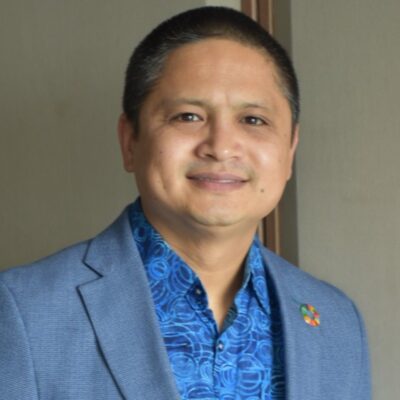
Samir KC

International Institute for Applied Systems Analysis

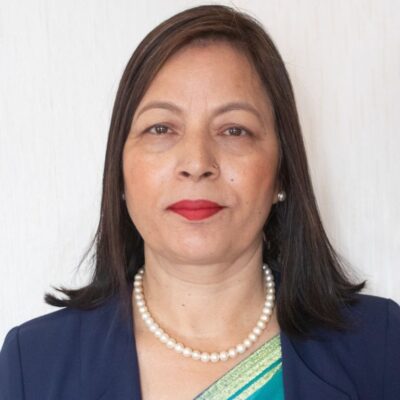
sewa lamsal

Ambassador of Nepal to the Benelux countries

Susmita Joshi

Astera Labs

Call for Abstracts and Sessions

We invite researchers, policymakers, civil society organizations, and industry leaders to submit abstracts for oral and poster presentations, as well as proposals for full panels and innovative sessions, for the conference. We welcome theoretical, empirical, practice-based, and policy-oriented submissions that translate scientific evidence into actionable sustainability pathways.

Abstract: 300 words maximum, plain text. No references, figures, tables, or HTML. Structure it in four parts: objective, methods, key results, conclusions, and relevance to sustainable development by and beyond 2030.

Title:  20 words maximum, sentence case, no unexplained acronyms. Printed exactly as entered.

Topic: Select one. See the Conference Themes page.

Keywords:  3 to 5, comma-separated, preferably from the published list for your topic.

Authors: Full name, e-mail, and affiliation (department, institution, city, country) for everyone listed. No placeholders. All must have agreed to be named.

One presenting author per contribution; a person may present a maximum of three contributions. No limit on co-authorship.

Registration is separate from acceptance. Presenting authors, (co-)chairs, and contributors must register by 7th March  2027, or the contribution will be withdrawn.

English only. Accepted abstracts will be published in the conference management system.

Full Panel Session Proposal: We invite proposals for full panel sessions addressing one of the conference topics. The full panel shall include one or more session (co-)chairs, one/two discussants, and four to six abstracts for presentations from at least two organizations. The 300-word abstract describes the session as a whole. Each presentation needs its own title, author list, and 300-word abstract. 

Innovative Session Proposal: We invite proposals for innovative sessions addressing one of the conference topics. These sessions are in a non-standard format with one or more (co-)chairs and at least four contributors from more than two organizations. For instance, these formats include panel debates, world cafes, role-plays, training workshops, hackathons, and science-policy dialogues. The 300-word abstract describes the interactive format, what participants will do, and the intended outcomes.

Ready to Submit?

Registration Fees

Standard Ticket: € 350.00
Concession Ticket* € 300.00
Standard Ticket: € 400.00
Concession Ticket* € 350.00

*Only for students enrolled in master’s and PhD programs and participants from low- and middle-income countries.

Steering Committee

Bart Bossink
United Nations Sustainable Development Solutions Network Netherlands & Vrije Universiteit Amsterdam, Netherlands
Bart Verheij
University of Groningen, the Netherlands
 
 
Bojie Fu
Chinese Academy of Sciences, China
 
 
Erle Ellis
University of Maryland, United States
Erik Buskens
University of Groningen, the Netherlands
Frank Biermann
International Panel on Earth System Governance & Utrecht University, the Netherlands)
Frans J. Sijtsma
University of Groningen, the Netherlands

Hermann Lotze-Campen
Potsdam Institute for Climate Impact Research, Germany

Klaus Hubacek
University of Groningen, the Netherlands

Lorenzo Squintani
University of Groningen, the Netherlands

Manda Broekhuis
University of Groningen, the Netherlands

Martina Schmidt
University of Groningen, the Netherlands

Ming Cao
University of Groningen, the Netherlands

Ranjula Bali Swain
Södertörn University & Stockholm School of Economics

Schelto Kruijff
University Medical Center Groningen, the Netherlands

Shobhakar Dhakal
Asian Institute of Technology, Thailand

Tim Benton
formerly Chatham House & University of Leeds, United Kingdom

(to be updated)

Scientific Committee

Amalia Dolga
Groningen Research Institute of Pharmacy, University of Groningen, the Netherlands

Anand Kumar
School of Management Studies, Nalanda University, India

Arpan Rijal
Faculty of Economics and Business Administration, University of Groningen, the Netherlands

Barbro Melgert
Groningen Research Institute of Pharmacy, University of Groningen, the Netherlands

Christina Prell
Faculty of Spatial Sciences, University of Groningen, the Netherlands

Dinesh Raj Bhuju
Madan Bhandari University of Science and Technology & Nepal Academy of Science and Technology, Nepal

Eugenia Rosca
Faculty of Economics and Business Administration, University of Groningen, the Netherlands

Gabriel Blanco
Faculty of Engineering, Universidad Nacional del Centro de la Provincia de Buenos Aires, Argentina

George Azzopardi
Bernoulli Institute, University of Groningen, the Netherlands

George Makrides
PHAETHON CoE, University of Cyprus
Gorazd Andrejc
Faculty of Religion, Culture and Society, University of Groningen, the Netherlands
Iva Pesa
Faculty of Arts, University of Groningen, the Netherlands
Jampel Dell’Angelo
Institute for Environmental Studies, Vrije Universiteit Amsterdam, the Netherlands
Junze Zhang
Research Center for Eco-Environmental Sciences, Chinese Academy of Sciences, China
Maheswar Rupakheti
IPCC Working Group I Vice-Chair & Research Institute for Sustainability at GFZ, Germany
Malcolm Campbell-Verduyn
Faculty of Arts, University of Groningen, the Netherlands
Min Chen
School of Geography, Nanjing Normal University, China
Minmin Wang
China Center for Health Development Studies, Peking University, China
Paul Upham
Energy and Sustainability Research Institute Groningen, University of Groningen, the Netherlands
Philipp Pattberg
Department of Environmental Policy Analysis & Amsterdam Sustainability Institute, the Netherlands
Rob van Poelje
SDG Netherlands Foundation, the Netherlands
Roeland Hemsteede
Workstream Lead for Climate and Environment, IOD PARC, United Kingdom
Samir KC
Multidimensional Demographic Modeling Research Group, International Institute for Applied Systems Analysis, Austria
Sjors Witjes
Radboud University, the Netherlands
Xin Sun
Energy and Sustainability Research Institute Groningen, University of Groningen, the Netherlands
Yubao Qiu
International Research Center of Big Data for Sustainable Development Goals, Chinese Academy of Sciences, China

(to be updated)

Organization Committee

Alejandro Zabala Figueroa
Energy and Sustainability Research Institute Groningen, University of Groningen
Anja Robbeson
Schools for Science & Society, University of Groningen
Astrid Bakker
Rudolf Agricola School for Sustainable Development, University of Groningen
Caterina Marinetti
IHE Delft Institute for Water Education & Research School for Socio-Economic and Natural Sciences of the Environment
Gabriel Olewe
Faculty of Spatial Sciences, University of Groningen
Gabriela Matouskova
Aletta Jacobs School of Public Health, University of Groningen
Irene Maltagliati
Rudolf Agricola School for Sustainable Development, University of Groningen
Jing Li
Energy and Sustainability Research Institute Groningen, University of Groningen
Sita Dijkstra
Aletta Jacobs School of Public Health, University of Groningen

Teun Kluck

Energy and Sustainability Research Institute Groningen, University of Groningen

Utkarsh Khot

Energy and Sustainability Research Institute Groningen, University of Groningen

Wouter Olland
Groningen Conventions

Conference Secretariat

Wanli Zheng

Organizational Lead

Anne Warchold

Secretary

Frederika Cazemier

Logistic Lead
Ponraj Arumugam

Scientific Lead

saurav

Communication Lead

Default Image

Conference Assistant

Hosted by

rugr_aletta logo

In partnership with

atmos

AIT

Nanjing_Normal_University_logo

Endorsed by

Partner journals

Experience Groningen

Join us in one of Europe’s leading cities for sustainability, innovation and academic excellence.

Default Image

Conference Assistant
saurav

Communication Lead

Ponraj Arumugam

Scientific Lead

Frederika Cazemier

Logistic Lead

Anne Warchold

Secretary

Wanli Zheng

Organizational Lead

Default Image

University of Groningen, Netherlands

Default Image

United Nations Sustainable Development Solutions Network Netherlands & Vrije Universiteit Amsterdam, Netherlands

Susmita Joshi

Astera Labs

sewa lamsal

Ambassador of Nepal to the Benelux countries

Samir KC

International Institute for Applied Systems Analysis

Default Image

Conference Assistant

saurav

Communication Lead

Ponraj Arumugam

Scientific Lead

Frederika Cazemier

Logistic Lead

Anne Warchold

Secretary

Wanli Zheng

Organizational Lead

Default Image

University of Groningen, Netherlands

Default Image

United Nations Sustainable Development Solutions Network Netherlands & Vrije Universiteit Amsterdam, Netherlands

Susmita Joshi

Astera Labs

sewa lamsal

Ambassador of Nepal to the Benelux countries

Samir KC

International Institute for Applied Systems Analysis

Scroll to Top